If you own a historic home in Somerville, MA or Medford, MA, you already know that charm comes with responsibility. Those beautiful old houses sitting on fieldstone or rubble stone foundations have survived decades, sometimes more than a century, of New England winters, spring thaws, and relentless moisture. But age catches up with everything, and when it comes to stone foundation waterproofing, ignoring the warning signs can turn a manageable repair into a costly structural crisis.
Understanding why fieldstone basement leaks happen, and how professional waterproofing historic stone foundation systems work, is the first step toward protecting your home for another hundred years.
The Unique Challenges of Historic Stone Foundations in Massachusetts
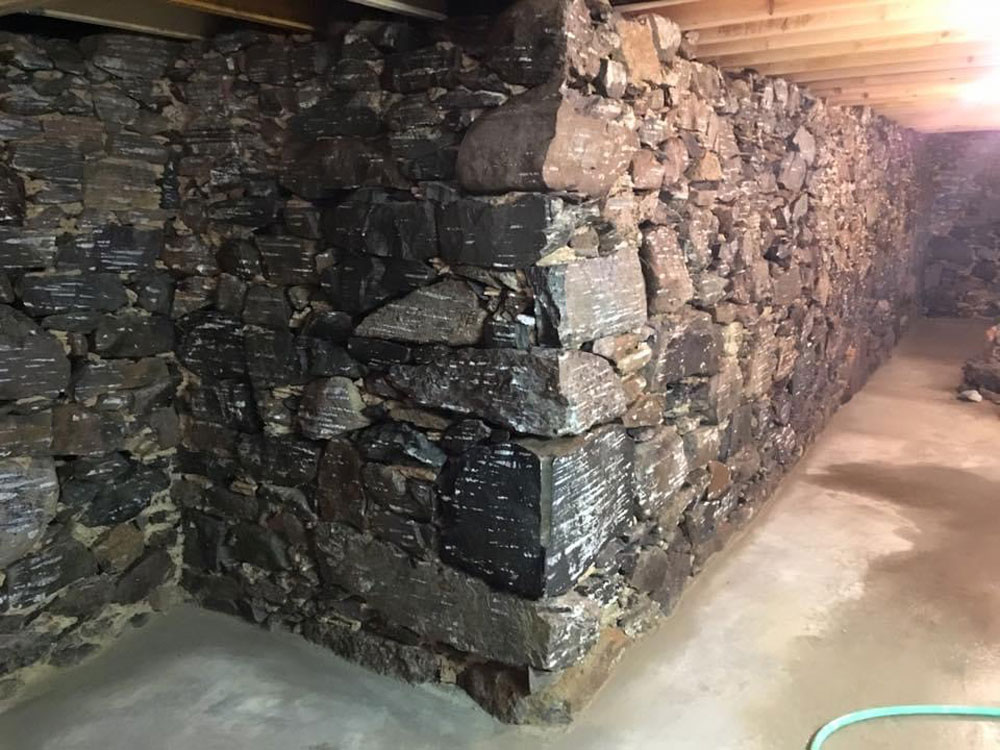
Somerville and Medford are two of the oldest residential communities in Massachusetts, and a significant portion of their housing stock dates back to the late 1800s and early 1900s. The foundations beneath these homes were built using whatever stone was locally available, typically fieldstone, granite rubble, or brick, held together with lime-based mortar.
Here is the problem: lime mortar was designed to flex. It absorbs movement and moisture as a feature, not a flaw. But after a century of freeze-thaw cycles, hydrostatic pressure, and soil movement, that mortar deteriorates. It crumbles, shrinks, and pulls away from the stone, leaving gaps that water exploits immediately.
Unlike modern poured concrete foundations, historic stone foundations are inherently porous. Water does not just seep through cracks; it migrates through the stone itself, through the mortar joints, and through the countless micro-voids that develop over time. This is what makes foundation moisture repair for older homes so different from newer construction. You are not just patching a crack. You are managing a dynamic, living system that responds to every rain event, snowmelt, and seasonal groundwater shift.
The clay-heavy soils common throughout the Somerville and Medford area make the situation worse. Clay retains water rather than draining it, which means that after a heavy rain, the soil pressed against your foundation can stay saturated for days. That sustained hydrostatic pressure pushes moisture through every available opening, and in a fieldstone foundation, those openings are plentiful.
Why Fieldstone Basement Leaks Are So Common and So Misunderstood
Many homeowners in Somerville and Medford make the same mistake: they see water on the basement floor and assume the problem is a crack they can seal with hydraulic cement or a coat of waterproof paint. These are temporary fixes at best, and at worst, they can trap moisture inside the wall and accelerate the very deterioration they were meant to stop.
Fieldstone basement leaks are not surface problems. They are systemic. Water is entering through degraded mortar joints, through the stone itself, through the cove joint where the wall meets the floor, and sometimes through the floor slab if one exists. Applying a surface sealant to the inside of a leaking fieldstone wall is like putting a bandage over a pipe that is still under pressure. It holds for a while, and then the pressure finds a new path.
This is especially common in the dense, older neighborhoods of Somerville, where homes sit close together and grading issues are frequent. When neighboring lots, sidewalks, and driveways all direct water toward your foundation, the pressure on those old stone walls is relentless. Professional foundation moisture repair accounts for all of these contributing factors, not just the visible symptoms.
There is also the issue of efflorescence, that white powdery residue that appears on stone and mortar surfaces. Many homeowners brush it off as a cosmetic issue, but efflorescence is actually a sign that water is actively moving through your foundation, dissolving minerals and depositing them on the surface as it evaporates. If you see it, water is already working inside your walls.
What Professional Waterproofing Historic Stone Foundation Systems Actually Involve
Waterproofing a historic stone foundation in Somerville, MA or Medford, MA is not a one-size-fits-all process. A qualified contractor will assess the specific conditions of your foundation before recommending a course of action, and that assessment makes all the difference.
Repointing is almost always part of the equation. Repointing and waterproofing services go hand in hand because no drainage system or membrane will perform well if the mortar joints are still crumbling. Repointing involves carefully removing deteriorated mortar to a safe depth and replacing it with a compatible material. For historic stone foundations, this typically means using a lime-based or NHL (natural hydraulic lime) mortar that matches the original composition. Using a modern Portland cement mortar on an old fieldstone wall can actually cause damage because Portland cement is too rigid and can crack the stone itself.
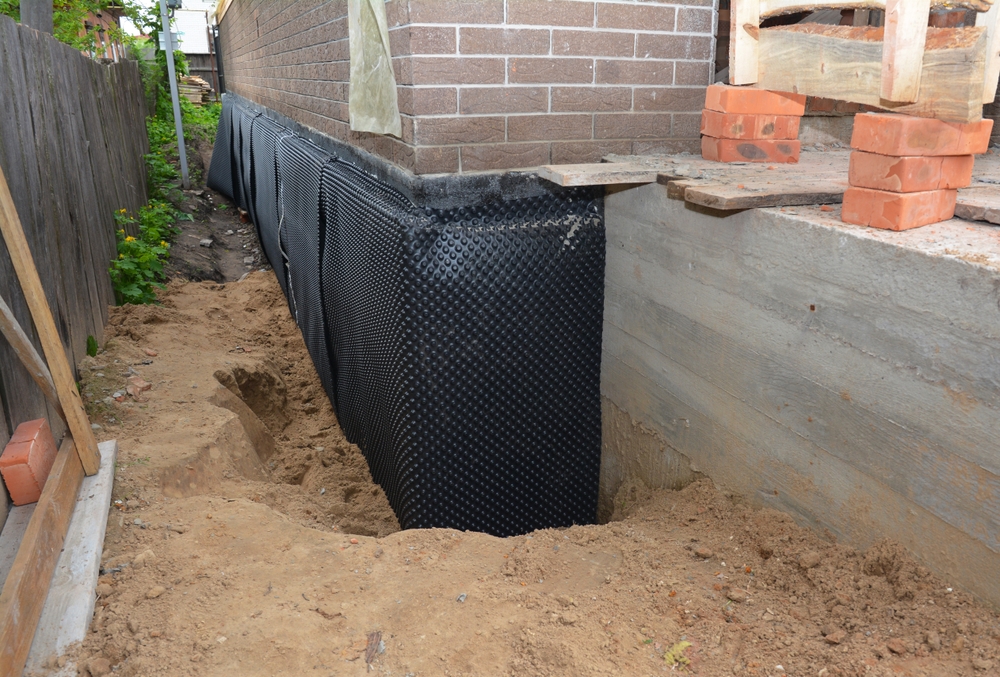
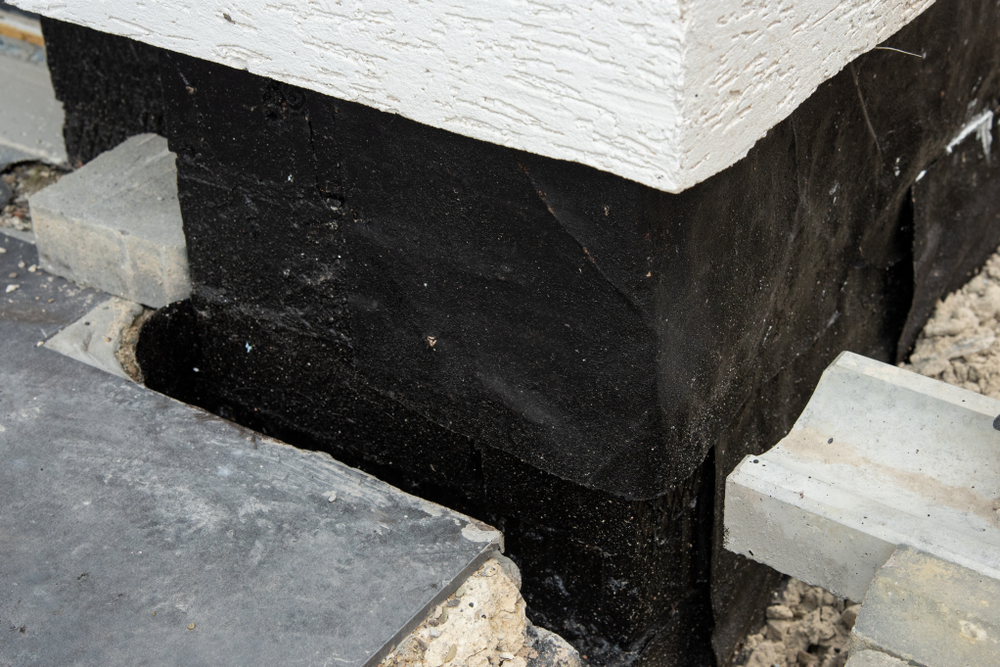
Once the mortar joints are addressed, the waterproofing strategy depends on whether the approach will be interior, exterior, or a combination of both. Exterior waterproofing is the most comprehensive solution. It involves excavating around the foundation, cleaning the stone surface, applying a waterproof membrane or coating, and installing a drainage board and footer drain that redirects water away before it can build up against the wall. In the tight lots and urban streetscapes of Somerville and Medford, full exterior excavation is not always practical, which is where interior waterproofing systems become essential.
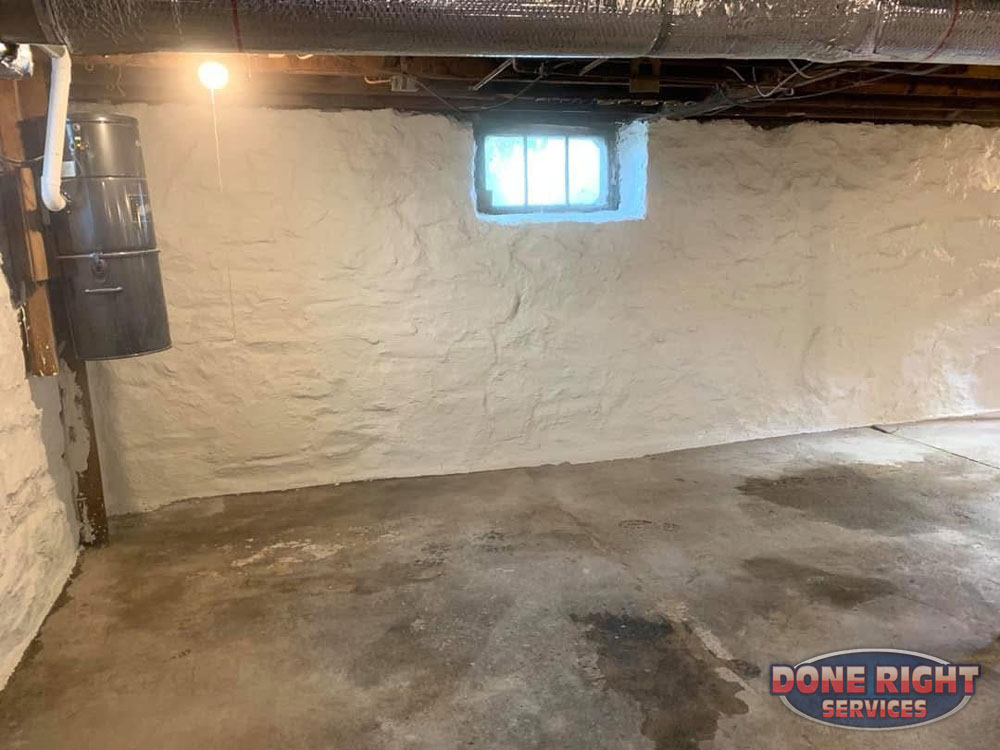
Interior systems typically involve installing a perimeter drainage channel at the base of the foundation wall, connecting it to a sump pump, and in some cases applying a vapor barrier or interior wall membrane. This does not stop water from entering the stone wall, but it manages and redirects that water before it can damage your basement or compromise the structural integrity of the foundation. When combined with proper repointing and waterproofing services, an interior drainage system provides reliable, long-term protection even in challenging conditions.
Crack injection, where applicable, and the installation of window well drains and proper grading corrections often round out a complete stone foundation waterproofing plan.
How to Choose the Right Contractor for Stone Foundation Waterproofing in Somerville and Medford
Not every waterproofing contractor understands historic masonry. This is one of the most important distinctions to make when you are looking at waterproofing your fieldstone or rubble stone foundation. A contractor who primarily works with modern poured concrete foundations may not appreciate the structural and material differences that come with a 100-year-old stone wall.
When evaluating contractors for stone foundation waterproofing in Somerville, MA or Medford, MA, ask specifically about their experience with historic foundations and lime mortar systems. Ask whether they perform repointing and waterproofing services as part of an integrated approach, or whether they outsource masonry work separately. Ask for references from similar historic properties in Massachusetts, and ask whether their solutions address both the symptoms and the source of moisture intrusion.
A good contractor will also be transparent about what their system can and cannot do. No interior waterproofing system eliminates moisture from entering a stone wall. What it does is manage that moisture so effectively that your basement stays dry and your foundation stays stable. Understanding that distinction will help you have a more productive conversation and set realistic expectations.
Look for contractors who are familiar with the permitting requirements and soil conditions specific to the Somerville and Medford area, and who have a track record of working on the kinds of dense residential lots that define both communities.
Conclusion
Stone foundations are a defining feature of historic homes in Somerville and Medford, but they require specialized care that goes well beyond standard waterproofing approaches. From deteriorated mortar joints to clay soil pressure to the unique porosity of fieldstone, the causes of foundation moisture in these communities are specific, and so are the solutions. By investing in professional stone foundation waterproofing that includes proper repointing and waterproofing services, you are not just fixing a wet basement. You are preserving the structural integrity and long-term value of a home that has already stood the test of time.
Need Foundation Repair Services Near You?
Here at Done Right Services, we take pride in being your trusted experts for fieldstone foundation repair across Massachusetts and New Hampshire. With decades of experience, our skilled professionals specialize in repair, re-pointing, restoration, and waterproofing to protect and enhance the integrity of your foundation. Our commitment to excellence is backed by a 30-year guarantee, ensuring you experience unmatched quality and peace of mind. Don’t wait—reach out to us today to discuss your foundation needs and discover why we’re the team you can count on for competence, excellence, and absolute satisfaction. Let us help you get the job done right!
Drive through the older neighborhoods of Manchester or along the historic streets of Portsmouth, and you will see homes that have stood for more than a century. Many of these properties rest on fieldstone foundations, built long before modern concrete became standard. These stone foundations carry character and craftsmanship that cannot be replicated. However, they also come with unique moisture challenges, especially in New Hampshire’s wet and coastal climate.
For homeowners between 30 and 65, property investors restoring historic homes, or buyers moving into older properties with basements or crawl spaces, understanding how to properly protect these foundations is critical. Basement moisture stone foundation issues do not simply disappear on their own. Without proper stone foundation waterproofing in Manchester, NH, or fieldstone foundation waterproofing in Portsmouth, NH, minor dampness can evolve into structural deterioration, mold growth, and costly repairs. Stone Foundation Repair specializes in long-term solutions that respect the integrity of historic materials while addressing moisture at its source.
Why Fieldstone Foundations Are Vulnerable to Moisture
Fieldstone foundations were constructed using irregular natural stones stacked together with mortar. While remarkably durable, these foundations were not originally designed with modern waterproofing systems in mind. Unlike poured concrete, fieldstone walls contain natural gaps and varied surfaces that allow moisture to migrate more easily.
In Manchester and Portsmouth, the problem is amplified by regional conditions. Coastal humidity, heavy rainfall, freeze-thaw cycles, and high groundwater levels all contribute to persistent basement moisture stone foundation problems. Over time, water seeps through mortar joints and between stones, especially as mortar begins to deteriorate with age.
Moisture migration risks unique to fieldstone include capillary action, where water is drawn upward through porous materials. Even if visible leaks are not present, dampness can accumulate within the wall structure itself. This can lead to crumbling mortar, spalling stone, and interior humidity issues that affect the living space above.
Understanding these vulnerabilities is the first step toward effective waterproofing historic stone foundations. Quick surface patches rarely address the root cause. Instead, a comprehensive approach is required to protect the structure long term.
Signs Your Stone Foundation Needs Waterproofing
Many homeowners first notice moisture problems through subtle warning signs. A musty odor in the basement, visible efflorescence on stone surfaces, or peeling paint may indicate persistent dampness. In more advanced cases, water staining or small puddles appear after heavy rain.
Fieldstone foundation waterproofing in Portsmouth, NH, often becomes urgent when mortar joints begin to crumble. As mortar weakens, stones shift slightly, widening gaps and allowing more water intrusion. This cycle accelerates deterioration.
In Manchester, where seasonal temperature fluctuations are common, freeze-thaw expansion can worsen small cracks and open mortar joints further. If foundation moisture repair in New Hampshire is delayed, structural integrity can be compromised over time.
Buyers and property investors should pay close attention during inspections. Even minor moisture indicators in a fieldstone basement can signal deeper issues that require professional evaluation. Stone Foundation Repair provides thorough assessments to determine whether waterproofing, repointing, or crack repair is necessary.
Waterproofing Methods Compatible with Stone Foundations
Waterproofing historic stone foundations requires specialized techniques. Modern concrete coatings or sealants designed for smooth surfaces often fail when applied directly to irregular fieldstone. Trapping moisture within stone walls can actually worsen deterioration.
Effective stone foundation waterproofing in Manchester, NH, focuses on breathable, compatible materials that allow the structure to release moisture naturally while preventing water intrusion. Lime-based mortars are commonly used in repointing because they maintain flexibility and permeability similar to the original construction.
Interior drainage systems can also be integrated to manage groundwater pressure. Rather than attempting to seal every stone completely, proper systems redirect water away from the foundation base, reducing hydrostatic pressure against the walls.
In Portsmouth’s coastal climate, managing exterior grading and drainage is equally important. Directing surface water away from the home minimizes saturation around the foundation. Stone Foundation Repair understands how to combine interior and exterior strategies to achieve comprehensive protection.
These methods avoid temporary fixes. Instead of relying on quick patch jobs, professional waterproofing historic stone foundations ensures compatibility with original materials and long-term structural stability.
Integrating Waterproofing with Crack Repair and Repointing
Waterproofing alone is not enough if mortar joints are deteriorating or cracks have formed between stones. Fieldstone foundation waterproofing in Portsmouth, NH, often involves a multi-step process that addresses both moisture control and structural reinforcement.
Repointing is a critical component. By carefully removing damaged mortar and replacing it with appropriate materials, gaps are sealed while maintaining the wall’s integrity. This process not only improves waterproofing but also stabilizes the stones themselves.
Crack repair must also be handled thoughtfully. Because fieldstone walls are irregular, each crack behaves differently. Some result from normal settlement, while others indicate pressure from moisture expansion. Integrating crack repair with waterproofing ensures that the entire wall system functions as intended.
Stone Foundation Repair specializes in combining foundation moisture repair in New Hampshire with expert repointing and crack stabilization. This integrated approach addresses the source of water infiltration rather than masking symptoms.
Long-Term Protection Versus Temporary Fixes
Homeowners sometimes attempt short-term solutions such as applying waterproof paint or surface sealants. While these products may provide temporary cosmetic improvement, they often fail under New Hampshire’s demanding weather conditions.
Trapping moisture behind non-breathable coatings can lead to accelerated stone deterioration. Over time, this can cause more extensive damage than the original moisture issue.
True stone foundation waterproofing in Manchester, NH, focuses on long-term protection. By respecting the unique characteristics of fieldstone construction and using compatible materials, professionals ensure that moisture is managed without compromising structural health.
For property investors and homeowners planning to remain in their homes for years to come, investing in proper waterproofing historic stone foundations provides peace of mind. It protects property value, improves indoor air quality, and prevents escalating repair costs.
Stone Foundation Repair brings experience and specialized knowledge to every project in Manchester and Portsmouth. Their commitment to durable solutions ensures that fieldstone homes continue standing strong against New Hampshire’s climate challenges.
Protecting the Character and Stability of Your Home
Fieldstone foundations are part of New Hampshire’s architectural heritage. They reflect craftsmanship from a time when homes were built to last generations. Preserving these foundations requires thoughtful care and professional expertise.
If you notice signs of basement moisture stone foundation issues or deteriorating mortar, acting early can prevent larger structural problems. Stone foundation waterproofing in Manchester, NH, and fieldstone foundation waterproofing in Portsmouth, NH, demand techniques tailored specifically to these historic materials.
Through integrated crack repair, repointing, and foundation moisture repair in New Hampshire, Stone Foundation Repair delivers solutions designed for longevity. Rather than temporary patches, their methods protect both the beauty and strength of your home.
In a region where moisture and coastal weather are constant factors, proactive waterproofing is not simply a maintenance task. It is a safeguard for your investment and your home’s future. With the right approach, historic stone foundations can continue supporting New Hampshire homes for generations to come.
Homeowners in Chelmsford, MA, are no strangers to unpredictable New England weather. With harsh winters, spring thaws, and sudden summer storms, water damage is a very real concern for many property owners. One of the most vulnerable areas in any home is the basement, which can suffer from leaks, moisture buildup, and flooding. Fortunately, with proactive basement waterproofing and a solid understanding of available solutions, Chelmsford residents can safeguard their homes against the costly consequences of water intrusion.
This comprehensive guide walks you through the essentials of water damage prevention, from identifying basement moisture issues to finding the right foundation waterproofing services and sump pump installation options. Whether you’re a new homeowner or tackling long-standing water issues, investing in proper basement moisture control is a crucial step toward a healthier, safer home.
The Importance of Basement Waterproofing
Basement waterproofing in Chelmsford, MA, is not just about preventing the inconvenience of a wet floor or musty smell. It’s about protecting your investment, preserving the structural integrity of your home, and ensuring the health and safety of your family. When water seeps into your basement, it can create a host of problems: from mold and mildew growth to wood rot and even foundation cracks. Over time, these issues can devalue your property and lead to costly repairs.
Waterproofing your basement is a multi-layered approach that combines preventative design, ongoing maintenance, and responsive repair strategies. Whether your home is newly built or several decades old, incorporating waterproofing systems is an essential line of defense. Local weather patterns in Chelmsford can exacerbate the risk of water damage, making it even more important for homeowners to take action before issues become severe.
In addition to keeping your basement dry, proper waterproofing also improves air quality, reduces the likelihood of pest infestations, and increases usable living space. These benefits contribute to a higher quality of life and add significant value to your home.
Common Sources of Basement Moisture in Chelmsford Homes
Before applying any waterproofing solutions, it’s crucial to identify where the water is coming from. The most common source of basement moisture in Chelmsford homes is groundwater. This is especially true for homes with poor drainage systems or those built on sloped terrain. Water can enter through cracks in the foundation walls, floors, or even through porous concrete.
Hydrostatic pressure is another culprit, occurring when water in the soil around the foundation builds up and pushes against basement walls. This pressure can force water through even the smallest openings, exacerbating existing issues or creating new ones.
Condensation is also a frequent problem in Massachusetts basements. In warmer months, humid air can settle on cooler basement surfaces, causing water to form on walls and pipes. This type of moisture is often mistaken for leaks, but it still contributes to mold growth and must be addressed as part of a full waterproofing plan.
Finally, improperly managed gutters and downspouts can lead to water pooling around the foundation, significantly increasing the chance of leaks. By correcting these exterior drainage issues, homeowners can often eliminate one of the leading causes of basement water intrusion.
Foundation Waterproofing Options in MA
Foundation waterproofing in MA is a critical measure that protects homes from long-term water damage. There are two main categories: interior and exterior waterproofing. Each has its own advantages, and in many cases, a combination of both provides the most comprehensive protection.
Exterior foundation waterproofing typically involves excavating the soil around the home and applying a waterproof barrier to the outside of the foundation. This process may also include installing drainage tiles or French drains to redirect water away from the foundation. Though more costly and labor-intensive, this method is highly effective in stopping water before it even enters the basement.
Interior waterproofing, on the other hand, focuses on controlling water that has already penetrated the structure. This may involve sealing cracks with epoxy injections, applying waterproof paint or sealant, and installing a perimeter drain system inside the basement. While it does not stop water from entering the foundation walls, it effectively channels it away from the interior.
The type of soil, age of the home, and local water table levels all influence which method is most appropriate. Working with experienced waterproofing contractors near Chelmsford ensures that your home gets the most suitable solution tailored to its specific needs.
Sump Pump Installation: A Smart Move for Flood-Prone Basements
Sump pump installation in Chelmsford is one of the most efficient ways to manage basement water problems, especially in flood-prone areas. A sump pump is a device installed in the lowest part of the basement or crawlspace that collects and pumps out water that accumulates in a specially constructed sump basin. This water is then directed away from the foundation, preventing flooding and water damage.
There are two primary types of sump pumps: pedestal and submersible. Pedestal pumps are mounted above the sump pit, making them easier to maintain but slightly noisier. Submersible pumps sit inside the pit, operate more quietly, and are often better suited for heavy-duty water removal.
In Chelmsford, where heavy rainfall and snowmelt can lead to saturated soil, having a reliable sump pump system in place can mean the difference between a dry basement and thousands of dollars in damage. Backup systems, such as battery-operated or water-powered pumps, are also recommended in case of power outages during storms.
When installed properly by professional waterproofing contractors near you, a sump pump acts as the final defense in a layered waterproofing strategy. It works in conjunction with interior drainage systems and moisture barriers to ensure that water is swiftly and efficiently removed before it causes harm.
Choosing the Right Waterproofing Contractors Near You
Finding the right team for your basement waterproofing project is key to achieving long-term success. Homeowners often start with a simple search for “waterproofing contractors near me,” but it takes more than proximity to find the right partner.
Look for contractors in Chelmsford with a strong track record of successful projects, relevant certifications, and positive customer reviews. Experience in local soil and weather conditions is a major asset, as it ensures that the contractor can design a solution suited to the unique environmental challenges of the region.
A trustworthy contractor will conduct a thorough inspection of your property before proposing any solutions. They should be transparent about costs, timelines, and the pros and cons of each option. Avoid one-size-fits-all solutions and instead seek customized recommendations that address your home’s specific vulnerabilities.
Make sure to ask about warranties and post-installation support as well. Basement waterproofing is an investment, and reputable contractors will stand behind their work with service guarantees that provide peace of mind.
Conclusion
Water damage prevention in Chelmsford, MA, starts with a proactive approach to basement waterproofing. By understanding the causes of basement moisture and investing in proper foundation waterproofing and sump pump installation, homeowners can protect their properties from the severe consequences of unchecked water intrusion.
From controlling condensation to addressing hydrostatic pressure and improving exterior drainage, a layered waterproofing strategy is the best defense against future problems. Choosing the right waterproofing contractors near you ensures that every component of the system is correctly installed and maintained.
Whether you’re already experiencing basement moisture issues or want to prevent them before they start, now is the time to act. Chelmsford’s weather won’t wait, and neither should your plans to secure your home. Embrace effective basement moisture control today and enjoy peace of mind no matter what the forecast brings.
Need Foundation Repair Services Near You?
Here at Done Right Services, we take pride in being your trusted experts for fieldstone foundation repair across Massachusetts and New Hampshire. With decades of experience, our skilled professionals specialize in repair, re-pointing, restoration, and waterproofing to protect and enhance the integrity of your foundation. Our commitment to excellence is backed by a 30-year guarantee, ensuring you experience unmatched quality and peace of mind. Don’t wait—reach out to us today to discuss your foundation needs and discover why we’re the team you can count on for competence, excellence, and absolute satisfaction. Let us help you get the job done right!
The charming town of Concord, MA, with its rich colonial history and picturesque homes, is a testament to New England’s architectural legacy. Many residences in the area feature stone foundations that have stood the test of time. However, despite their historic appeal, stone foundations are particularly susceptible to moisture infiltration due to their porous nature and aging mortar. Recognizing when your stone foundation needs waterproofing is not just about maintaining structural integrity—it’s also about preserving property value and ensuring a healthy living environment. Here’s a deep dive into the key signs and implications of water damage, and why timely stone foundation waterproofing is essential in Concord, MA.
The Vulnerability of Stone Foundations in New England’s Climate
Stone foundations, though durable, are not impervious to the elements. Built predominantly before the 20th century, these foundations relied on stone masonry held together by lime-based mortar, which deteriorates over time. In Concord, MA, the fluctuating seasons—particularly the freeze-thaw cycles during winter—can exacerbate the degradation of this mortar, leading to gaps that invite moisture intrusion.
Moreover, Concord’s relatively high water table and periodic heavy rainfall only heighten the risk. Without modern drainage systems or adequate sealants, older stone foundations are prone to water seepage. This results in a host of problems, including erosion of the mortar, growth of mold and mildew, and even structural shifting.
The granite and fieldstone materials commonly used in Concord’s historic homes, while visually stunning, can become sponges for groundwater. Without proper stone foundation waterproofing, residents may find themselves battling persistent dampness, musty odors, and in severe cases, crumbling walls and foundation collapse.
Signs That Your Stone Foundation Needs Immediate Attention
Homeowners often miss the early signs of water infiltration because they develop gradually and subtly. One of the most common indicators is the presence of efflorescence—a white, chalky residue that appears on basement walls. This is a telltale sign of water evaporating and leaving behind salt deposits, indicating that moisture is actively penetrating the stone.
Another common symptom is a persistent damp smell in the basement or lower levels. This earthy odor, often accompanied by a noticeable rise in humidity, can point to ongoing water intrusion and mold growth. In Concord, MA, where basements are often used for storage or as living spaces, such conditions can compromise indoor air quality and health.
Cracks in the foundation walls, especially those that are widening over time, are a critical warning. These cracks can be horizontal, vertical, or stair-step in nature and often signify structural movement due to soil pressure or water damage. If not addressed promptly, they can lead to costly foundation repairs.
Water pooling around the base of the home after rainfall, or visible watermarks on walls and floors, are also red flags. Even if these signs appear mild or intermittent, they should never be ignored. In many cases, by the time visible damage appears, the underlying issues are already extensive.
The Importance of Timely Waterproofing in Concord, MA
Stone foundation waterproofing is not just a reactive measure—it’s a proactive investment in your property’s longevity. In Concord, where historic preservation is a priority and homes often date back centuries, maintaining the integrity of stone foundations is critical. Waterproofing protects not only the physical structure but also the historical value of these unique homes.
Waterproofing methods today are far more advanced and minimally invasive than those available a few decades ago. Solutions such as exterior membrane applications, interior sealants, and French drain installations can dramatically improve a foundation’s resistance to water. In many cases, stone foundation waterproofing also includes re-pointing the mortar joints, which reinforces the structure while sealing out moisture.
By engaging a professional who understands the specific challenges posed by Concord’s soil conditions, weather patterns, and architectural styles, homeowners can ensure a tailored approach to waterproofing. This is especially important because generic solutions may not suit the unique dynamics of a stone foundation.
Additionally, waterproofing enhances the usability of basements and crawl spaces. Whether you plan to convert the area into a living space or simply want to protect stored belongings, a dry and stable foundation is indispensable. In the long run, waterproofing contributes to higher property resale values and reduces the risk of expensive repairs down the road.
Choosing the Right Waterproofing Strategy for Your Stone Foundation
Every stone foundation is different, and a one-size-fits-all approach to waterproofing can do more harm than good. In Concord, MA, professional assessment is crucial to determine the appropriate strategy. Factors such as the age of the home, the composition and condition of the foundation stones, drainage setup, and local topography all influence the choice of waterproofing system.
Exterior excavation and membrane waterproofing are often considered the gold standard, especially for persistent water issues. This involves digging around the foundation, repairing cracks and mortar joints, and applying a waterproof membrane that repels moisture. It’s a more invasive and costly solution but offers the most comprehensive protection.
Interior solutions, such as negative-side waterproofing and sump pump installation, can also be effective for less severe moisture problems. These methods are typically less disruptive and can be installed more quickly, but they are often used as complementary solutions rather than stand-alone fixes.
It’s important to choose contractors with experience specifically in stone foundation waterproofing. Unlike poured concrete or cinder block foundations, stone structures require nuanced handling and specialized materials to avoid further weakening the structure. Look for companies in Concord, MA, with a proven track record of working on historic homes and a deep understanding of local building codes and preservation guidelines.
Long-Term Benefits and Peace of Mind
The benefits of stone foundation waterproofing extend far beyond immediate structural repairs. By proactively addressing moisture issues, homeowners in Concord can enjoy long-term peace of mind knowing that their foundation is secure, their home is healthy, and their investment is protected.
Waterproofing reduces the risk of mold and mildew, which are known to aggravate respiratory conditions and allergies. A dry basement also deters pests, including termites and rodents, which are attracted to moist environments. These health and hygiene improvements can significantly enhance the comfort of your living environment.
Financially, waterproofing can save tens of thousands of dollars over time. The cost of mitigating foundation failure, mold remediation, or structural collapse far outweighs the upfront investment in preventive waterproofing. Moreover, in the competitive real estate market of Concord, MA, homes with waterproofed foundations are more attractive to potential buyers.
For homeowners seeking to preserve both the history and value of their property, stone foundation waterproofing is an essential step. By recognizing the signs early and choosing the right intervention, you safeguard not only your home’s structural integrity but also its legacy in one of Massachusetts’ most treasured communities.
Conclusion
Stone foundations are a hallmark of Concord’s historical charm, but they demand vigilant maintenance and modern solutions to remain resilient with the help of New England stone foundation experts. Whether you’re a new homeowner or a long-time resident, knowing when your stone foundation needs waterproofing is key to protecting your home against the elements, preserving its character, and ensuring its endurance for generations to come.
Need Foundation Repair Services Near You?
Here at Done Right Services, we take pride in being your trusted experts for fieldstone foundation repair across Massachusetts and New Hampshire. With decades of experience, our skilled professionals specialize in repair, re-pointing, restoration, and waterproofing to protect and enhance the integrity of your foundation. Our commitment to excellence is backed by a 30-year guarantee, ensuring you experience unmatched quality and peace of mind. Don’t wait—reach out to us today to discuss your foundation needs and discover why we’re the team you can count on for competence, excellence, and absolute satisfaction. Let us help you get the job done right!
In New England, particularly in Massachusetts, historic stone foundations are a hallmark of the region’s architectural legacy. While they offer charm and durability, they also pose unique challenges when it comes to moisture management. The frequent rain, fluctuating temperatures, and coastal humidity all contribute to moisture infiltration that can threaten the structural integrity of stone foundations. The need for an effective solution is clear, but the answer isn’t as simple as slathering on a waterproofing sealant. That’s where breathable waterproofing comes in—a modern approach that safeguards your foundation without compromising its ability to naturally manage moisture. In this blog, we’ll explore the science and application of breathable waterproofing and why it’s an essential strategy for homeowners in Massachusetts.
The Moisture Dilemma: Why Traditional Waterproofing Fails
Traditional waterproofing methods often involve applying thick, impervious coatings to the interior or exterior surfaces of a foundation. These barriers, made from materials like asphalt-based tar or dense polymer membranes, are designed to stop water from penetrating the foundation walls. While this might seem like a sound approach at first glance, it overlooks the physics of moisture transfer in stone and masonry structures.
Stone foundations are inherently porous. They absorb moisture from the surrounding soil and air, especially during wet seasons. This absorbed water naturally seeks to evaporate outward—or inward—depending on the conditions. When traditional, non-breathable waterproofing methods are applied, they block this natural moisture migration. Instead of escaping, water becomes trapped within the walls. Over time, this trapped moisture can lead to several problems: freeze-thaw cycles that cause cracking, efflorescence (mineral deposits) that deteriorate stone, mold growth, and even structural weakening.
In Massachusetts, where temperatures regularly dip below freezing in the winter and humidity levels soar in the summer, this cycle of absorption and blockage is especially damaging. Rather than helping, non-breathable waterproofing often accelerates deterioration, making breathable waterproofing not just a preferable solution, but a necessary one.
Understanding Breathable Waterproofing: Letting the Walls Breathe
Breathable waterproofing is an advanced moisture-control strategy designed to prevent water ingress while still allowing vapor to escape. The principle is similar to that of a high-performance rain jacket—it keeps external moisture out while letting internal moisture dissipate. This is achieved through specialized vapor-permeable products that are applied as coatings, membranes, or liners.
These breathable solutions are made from materials such as silane/siloxane-based sealers, lime-based plasters, or specially engineered acrylics and elastomers. Unlike their impermeable counterparts, these materials bond with the substrate on a micro-level. They fill in capillary pores to block bulk water (like rain or groundwater seepage), yet they maintain microscopic channels that permit water vapor to exit.
This dual-action performance is especially beneficial for stone foundations because it aligns with their natural dynamics. Instead of trying to force the foundation into being “dry” by sealing it airtight, breathable waterproofing respects the natural moisture transfer of masonry materials while adding a layer of intelligent protection.
Breathable Waterproofing in Practice: Application and Benefits
Implementing breathable waterproofing in Massachusetts homes begins with a thorough assessment of the foundation. Experienced professionals will first identify existing water ingress points, check for internal moisture build-up, and evaluate the condition of the stone and mortar. Once diagnosed, the appropriate breathable system is selected.
One common approach involves using silane or siloxane sealants on the exterior surface of the stone. These treatments penetrate deep into the material and chemically bond with it, creating a hydrophobic layer that repels water without forming a surface film. Because these sealants are vapor-permeable, they do not hinder moisture that may need to evaporate from within the wall.
Interior applications might include breathable mineral coatings or lime-based plasters, which absorb and slowly release interior moisture, maintaining equilibrium without encouraging mold or dampness. In some cases, advanced drainage systems or capillary breaks are integrated into the design to complement the breathable barrier.
The benefits of this approach are both immediate and long-lasting. Homeowners report reduced basement dampness, elimination of musty odors, and lower risks of mold growth. Structurally, the stone remains stronger, with fewer cracks and signs of decay over time. Because the system works with—not against—natural environmental changes, it is far more sustainable and low-maintenance than traditional methods.
Unique Considerations for Massachusetts Homes
Massachusetts presents a particularly compelling case for breathable waterproofing due to its historic building stock and challenging climate. Many older homes in towns like Salem, Lexington, and Concord still have original stone foundations dating back centuries. These foundations were built in a time before moisture barriers and rely on their massive mass and breathability to manage dampness.
Retrofitting these historic structures with non-breathable waterproofing often causes more harm than good. In contrast, breathable systems respect the architectural integrity and material behavior of these foundations, making them ideal for preservation work.
Additionally, the state’s freeze-thaw cycles demand a moisture management approach that avoids internal water accumulation. When moisture is trapped in a foundation and freezes, it expands, cracking the stone and weakening mortar joints. Breathable waterproofing significantly reduces the likelihood of such events by allowing moisture to escape before temperatures drop.
The coastal regions of Massachusetts add another layer of complexity. Salt-laden air and fluctuating humidity levels further stress building materials. Breathable systems can resist salt damage and help moderate internal humidity, making them especially useful in places like Cape Cod and the North Shore.
Investing in the Future: Why Breathable Waterproofing is Worth It
For Massachusetts homeowners, breathable waterproofing is not just a reactive solution—it’s a proactive investment in the long-term health of a property. When compared to the recurring costs of repairing water damage, replacing stone, or managing mold outbreaks, breathable waterproofing offers excellent value. It protects the foundation, improves indoor air quality, and maintains the aesthetic and structural integrity of the home.
Moreover, as green building practices become more mainstream, breathable waterproofing aligns with sustainability goals. It reduces dependency on harsh chemical treatments, minimizes energy use for dehumidification, and extends the life cycle of existing building materials. It also meets the requirements for preservation of historical architecture, often making it eligible for tax incentives or grants in designated historic districts.
In terms of resale, homes with well-maintained, dry basements are more attractive to buyers. Foundation repairs for stone homes treated with breathable waterproofing can be a selling point, demonstrating care, foresight, and energy-conscious living.
Conclusion
If you’re a Massachusetts homeowner with a stone foundation, breathable waterproofing should be on your radar. It’s a modern technique rooted in respect for traditional materials, offering a smarter, safer, and more sustainable way to protect your home from the elements without compromising its natural moisture dynamics. Whether your concern is preservation, performance, or peace of mind, breathable waterproofing provides a balanced solution for one of your home’s most critical structural components.
Need Foundation Repair Services Near You?
Here at Done Right Services, we take pride in being your trusted experts for fieldstone foundation repair across Massachusetts and New Hampshire. With decades of experience, our skilled professionals specialize in repair, re-pointing, restoration, and waterproofing to protect and enhance the integrity of your foundation. Our commitment to excellence is backed by a 30-year guarantee, ensuring you experience unmatched quality and peace of mind. Don’t wait—reach out to us today to discuss your foundation needs and discover why we’re the team you can count on for competence, excellence, and absolute satisfaction. Let us help you get the job done right!